Home/Services/Septic Tank Installation & Replacement
Septic Tank Installation & Replacement in Miami, FL
We provide septic tank installation and replacement to Miami, FL. We plan the tank and drain field around the home, soil and groundwater conditions. We also provide septic repairs 24 hours a day.
Miami-Dade requires performance based treatment for new and complete replacement systems. Tank storage, daily treatment capacity and drain field area are separate design choices; a bigger conventional tank alone does not meet that requirement. We plan the approved tank material, treatment components, access and disposal area around the property's evaluated conditions and county review.
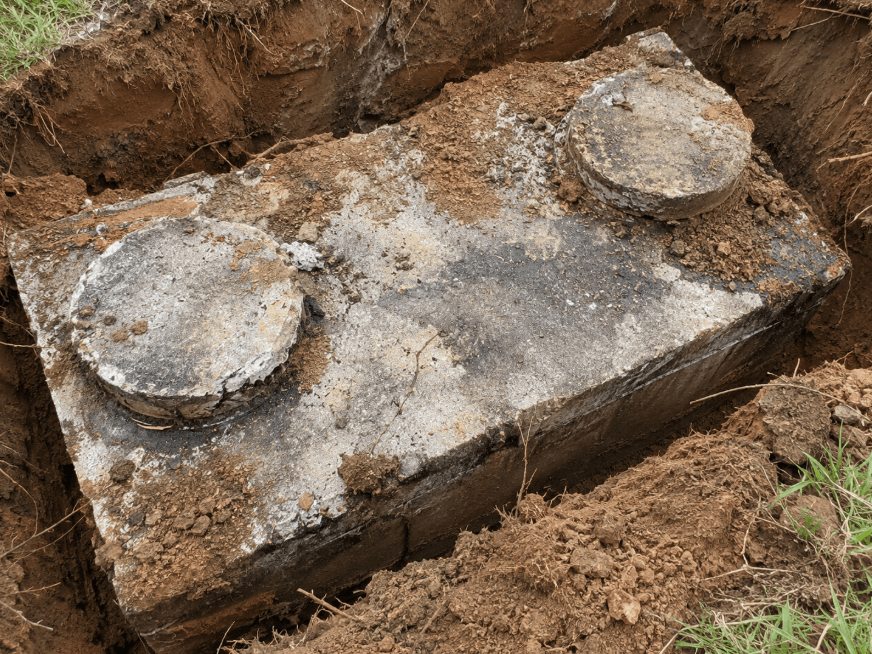
The property owner's inspection identified cracks in the existing tank. Past its expected service life and no longer viable, it needed replacement.
The project included excavating the site, taking out the old tank for disposal and installing the same type of concrete tank at 1,000 gallons of capacity.
Cost
$9,843
Timeline to completion
3 to 5 days, not including permitting
Size the System for the Property
Bedrooms, building area and approved daily wastewater flow guide sizing. A three bedroom, two bath, home measuring 1,800 square feet is a useful planning example, not a countywide average. Additions and commercial uses need review. More tank storage cannot fix an undersized field.
Soil, Groundwater and Available Space
Evaluate the wet season water table, usable soil, setbacks and disposal area. Limestone and shallow groundwater make a property evaluation essential. Fast movement through rock is not the same as adequate wastewater treatment. An old footprint is not a guaranteed location for a new design.
Check Sewer Availability First
Miami-Dade’s Connect 2 Protect program extends sewer service in selected areas. Check current availability and any connection notice for the address before investing in replacement. Neighboring septic systems do not establish that a new system will be approved.
Miami-Dade Requires More Than a Conventional System
Conventional Type 1 systems are not allowed for new or total replacement projects. DERM reviews proposed systems, with treatment requirements based on the property. Tank only replacement and field repair are different scopes from total replacement and need the appropriate review.
Concrete, Fiberglass or Polyethylene?
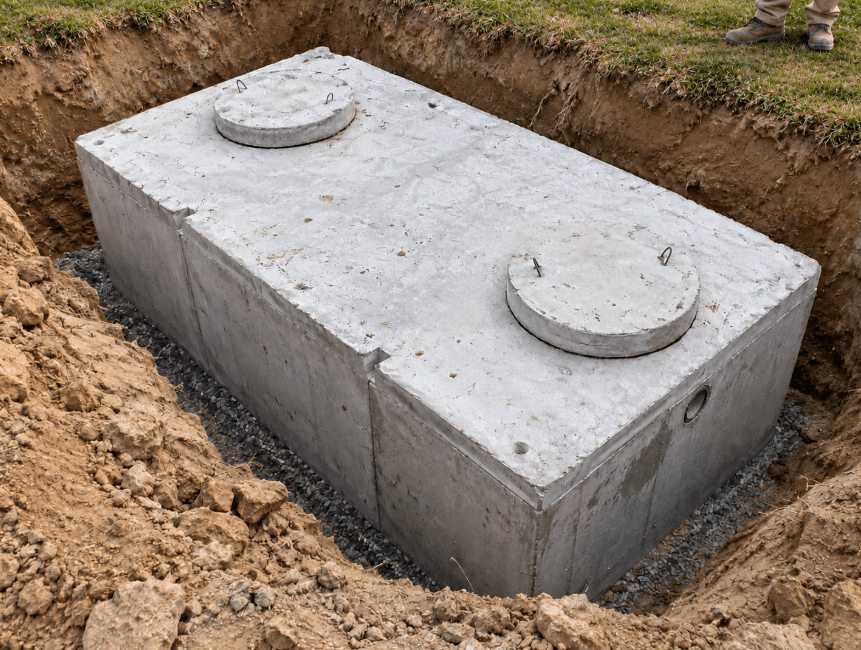
Concrete is a substantial, rigid material that needs suitable placement equipment and access. Fiberglass and polyethylene are lighter options with specific support, backfill and groundwater requirements. Choose an approved model suitable for the design. Tank material and treatment process describe different things.
New Installation and Replacement Scopes
A new installation begins with the building and site plan. A replacement begins with records and failure findings. The proposal should identify retained components, treatment equipment, field work, old system abandonment, approvals and restoration. The starting price is a budget figure, not a guarantee of an approved design.
Residential tank sizes you may encounter range from roughly 900 to 1,500 gallons, with larger tanks or multiple units for higher demand properties. A tank holding 1,000 gallons is a useful example for a smaller home, but it is not Florida’s universal two bedroom requirement. Confirm the tank’s effective liquid capacity from its approval label and permit record.
Concrete Tanks
Heavy, rigid shells that need lifting equipment and a properly prepared base. Watch for deteriorated covers, wall damage and leaking seams. Concrete’s weight does not eliminate uplift risk when a tank is emptied in high groundwater.
Fiberglass Tanks
Lighter composite shells that resist rust and can be easier to position with limited access. Check fittings and the shell for damage. Support, backfill and any anchoring must follow the approved model’s instructions.
Polyethylene Tanks
Molded plastic tanks that are also lightweight. Correct burial depth, backfill and groundwater provisions help prevent movement or deformation. A lightweight tank is not automatically suitable for every Miami property.
Our typical product planning estimate is 15 to 20 years, depending on the tank installed, conditions and care. The tank shell, drain field, pumps and controls may have different service lives. Review the selected manufacturer’s specifications and warranty.
Florida sizing examples when bedroom count and building area match the listed category
Home example
Design flow
Minimum effective tank capacity
2 bedrooms, up to 1,200 sq ft
200 gallons/day
900 gallons
3 bedrooms, 1,201 to 2,250 sq ft
300 gallons/day
900 gallons
4 bedrooms, 2,251 to 3,300 sq ft
400 gallons/day
1,050 gallons
These are minimum storage examples, not final designs. A home with more floor area than its bedroom category allows can require a larger system. The higher resulting flow governs, and treatment equipment may require additional tanks. New and complete replacement systems in Miami-Dade also need performance based treatment and the applicable approvals.
Not for a new or complete replacement in Miami-Dade under current County requirements. Confirm the applicable performance based treatment design.
Is an aerobic system a tank material?
No. Aerobic describes a treatment process. Concrete, fiberglass and polyethylene describe materials.
How does replacement differ from new installation?
Replacement includes evaluating the existing system and planning which old components will be removed or retained. A new installation starts with the proposed building and site. Both need an approved design suited to the property.